
Off-grid power in Nevis
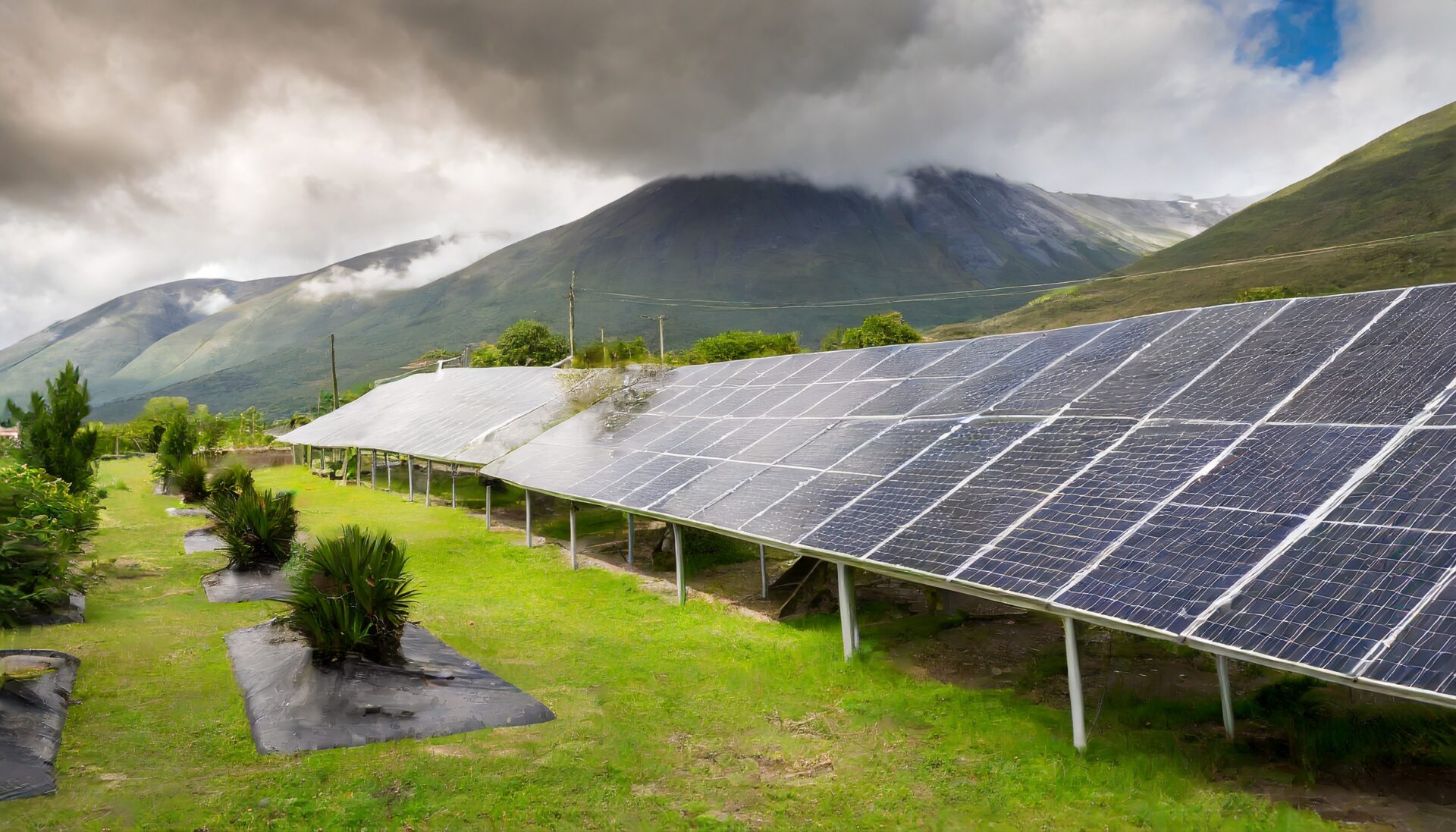
An island in the Caribbean Sea with a circumference of 30kms and a total land area of just 93 km2. There are just 4 food shops and 8 electrical generators cover the island. The first electrical generator was installed in the Charlestown area in 1954 but it wasn’t until 1971 that the whole island was powered and even now there are frequent power outages.
It became independent from Britain in 1983 and forms part of St Kitts and Nevis. Nevis is separated from St Kitts by a narrow 3 km channel. However there is a separate Nevis island assembly with wide ranging powers and a capital at Charlestown (population 1,500). Nevis has just 11,000 people although this is rising as financial services attract wealthy investors.
GDP is $952 million with a per capita of $26,400
The island is conical in shape with numerous villages and small towns at different levels below the massive volcanic peaks. The island is divided into 5 parishes each of which elects a representative to the Island Council and the bigger St Kitts and Nevis parliament. The island derives its name from the Spanish, ‘Our Lady of the Snows’. Columbus visited the island in 1498 but initially it was called St Martin confusing it with another island of the same name.
Life on Nevis is simple and people are content but literacy rates at 98% are amongst the highest in the world and this has been important in the development of the tourist industry and newer financial service sector.
Like the Caymans, BVI and Antigua, Nevis has become an important off shore financial centre.
By the time of independence in 1983 the island had sealed roads, an electrical supply and a secure water supply from La Source and other springs below the volcanic cones. In more recent years a shortage of water, because of the tourist industry and rising tourist numbers, has meant pumping out ground water and mixing with spring water.
After independence, the island was well governed and by the early 2,000’s there was a substantial current account and public expenditure increased including the building of a new airport, new roads and a deep water harbour at Charlestown, so attracting yachts, wealthy visitors and residents.
The new airport is called the Vance Amory International Airport but its services are mainly regional while St Kitts retains the international airport.
But the new airport is also attractive to visitors arriving by private jet from Europe and the US.
These public investments led to a period of rapid growth, amongst the highest in the Caribbean.
But Nevis also suffers from hurricanes which have caused substantial damage including Hugo in 1989, George in 1998 and Lenny in 1999. In 2008 Hurricane Omar severely damaged the Fours Seasons, the primary resort hotel on the island and it was partly closed for 2 years while repairs were done and 400 out of 600 people lost their jobs for those 2 years. That 600 represents more than 5% of the entire population.
Western Nevis and Nelsons spring.
Nevis was known to the original Arawak inhabitants as Oualie in their idyllic paradise and means ‘land of beautiful waters’ When the Spanish arrived they carried off the surviving Arawaks into slavery and after the British took over in 1628 they were replaced by African slaves. A small British elite of plantation owners and a large number of slaves built a hugely profitable sugar industry. Nevisian sugar was the best in the Caribbean because of its high sugar content. Every square metre of land was used for sugar leading to soil erosion and degradation of the land. The prosperity (for the owners)(20% of the Caribbean sugar industries) lasted until 1706 when the island was attacked by French pirates and mercenaries. The plantations were destroyed and many of the slaves were carried off to Louisiana to become the first African Americans.
However they were driven off with great bravery by many of the slaves and they took land holdings for growing basic crops. By contrast the owners were compensate by the British and many moved to other Caribbean islands and to the American colonies including the family of Alexander Hamilton. Many of the slaves escaped into the hills to become maroons- free people. The sugar industry survived but on a much smaller scale.
Nevis became a backwater and it was not until 1834 that slavery was formally abolished. Nevisians still celebrate emancipation day.
In 1882 the island was joined with St Kitts and Anguilla but the island was deprived of development and didn’t even have a hospital until late into the 19th Century. The 1983 federation originally included Anguilla but it broke away and remains a UK dependent territory.
Tourism grew in the following years and a high level of education made it attractive for new investment. Nevisian students regularly secure the best results in the exams organised by the Caribbean Exam Council.
The volcanic cones are extinct – the last eruption was at least 100,000 years ago but there are occasional hot springs, the last taking place in 1953 and creating a source for geothermal power. The coasts were once covered with thick forests but sugar and cotton cultivation destroyed the forests and led to large scale erosion especially on the eastern coast exposed to the Atlantic ocean.
THE ECONOMY
Tourism
Nevis now has a per capita income 10% higher than St Kitts and this is all as result of tourism and financial services which emerged in the 1990’s. Nevis alone had 40,000 tourists in 2004 and by 2019 this had grown (with St Kitts) to 1,107,000 visitors per year. This includes the substantial numbers of cruise tourists, St Kitts has a harbour that can accommodate large cruise liners.
Nevis alone has 20.8 tourists per head of population which is 7th in the world and 1st in the Caribbean. Tourism accounts for $395 million in contributions to GDP.
Resort and hotel development is confined to the coast south of Charlestown but new developments are awaiting approval for the east coast. In 2020/21 the pandemic has devastated the tourist industry especially the cruise ship visits to the islands.
Financial services
Ilfracombe in Devon, England with 11,000 people has 2 banks, 2 accounting companies and 2 lawyers. By contrast, Nevis also with 11,000 people has; 6 domestic banks, 1 x international bank, 58 registered agents (lawyers), 4 x money serving companies and 7 international estate agents.
Financial services accounts for 10% of government revenue. It is now has one of the largest asset management industries in the world with people and companies hiding assets from around the world. They offer secrecy, insurance and reinsurance, trust companies and company registration(more than 20,000 registrations).
Nevis also offers citizenship in exchange for investment. Nevis is hoping to attract new investment to further develop the island.
Nevis also has a film industry and is a popular location for action films. A combination of climate, tax concessions and plentiful capital has attracted a growing industry.
Nevis no longer has a sugar industry but Sea Island cotton is still grown and there are many farm supplying hotels and restaurants with fresh fruit and vegetables.
Energy
Electricity on Nevis is produced by Nivelec with an installed capacity of 13.4 mW. 10.4 mW peak demand and generated power per year of 5.61 gWhrs. Only 5.7% is renewable with 1.77% from solar. Most power – 94%, is generated by diesel generators and all the fuel is imported with a great strain on the balance of payments. Nevis spend around $40 million a year on imported fuel both petrol and diesel.
Transmission losses account for 20% of generated power with most lost through unauthorised consumption: This compares with 6% in the US.
31% of consumption is used in residential areas while 39% is consumed commercially including offices and hotel resorts.
The Government of Nevis and Nivelec have an energy plan for a massive growth in renewable energy through encouraging Independent power producers (IPP). IPP producers will require a licence which is valid for 25 years. Nevis is very conscious of climate change with the island being vulnerable to rising sea levels. They anticipate that so much power will be produced through IPPS including both wind and geothermal power that the surplus can be sold to Puerto Rico, 400 miles away and but would need an underwater cable. 10 mW of geothermal is planned while there is 16mW of solar potential.
5 kW hrs per m2 of free solar is available to offgrid users.
Residential grid users pay $0.26 per kwHr while commercial users pay $0.30 per kWhr.
Offgridinstaller can help clients both private and commercial to operate offgrid and fully utilise the free solar energy of 5 kWhrs per square metre. Their offgrid systems can also recharge electric vehicles – cars, pick up , motor bikes and electrically assisted bikes all using free power.
For new properties we can integrate solar panels into the building and for commercial buildings or apartment blocks we can included a 20 foot container fully fitted and equipped with batteries, inverters and power control units. Ideal for preventing damage to equipment, protecting against hurricanes and preventing theft and even theft of power.
Our brands
Off-Grid Installer are proud to bring you the best solar products, sourced only from the world's leading manufacturers.


Interested in getting started?
Get in touch with one of our Off-Grid experts now.
Contact Us
Contact us today to speak with our experienced and knowledgeable consultants — we would love to hear from you!
Address
Trinity Suite, Office 4, Hawkesyard Hall, Rugeley, Staffordshire WS15 1PU