
After Coronavirus; a new renewable energy economy base in Africa on renewable energy
Solar energy at the heart of this new economy
A large part of the world is in lockdown with the UK government saying that it could be six months before things get back to normal. This may prove absurdly optimistic. However its not all bad news as the big shutdown necessary to fight coronavirus in countries around the world has had a rapid and positive impact on the environment.
In the UK, the shutdown has already seen a massive improvement in air quality with reduction in of 67% in nitrogen dioxide in London and lower figures elsewhere in Europe, Japan and North America. With India on lockdown expect to see big improvements in that vast country. Such as been the improvement in China that the centres of large industrial cities can once again be seen from the International Space Station.
In consequence deaths from bronchial diseases have also fallen because of the cleaner air and some say the saving of life in China has been greater than the deaths from COFID 19
The enormous problems caused by the virus including the lockdown across the world may actually lead to a low (and eventually-no) carbon future much quicker than previously planned or agreed. Saudi and other producing states are still pumping oil but the price has dropped to $20 per barrel without any significant fall in the retail price. The oil producing states are running out of storage capacity and so more and more oil is being stored in oil tankers where the cost is prohibitive. By contrast solar had fallen in cost by 95% since 2014 and continues to fall while experience and proof of the technology rises.
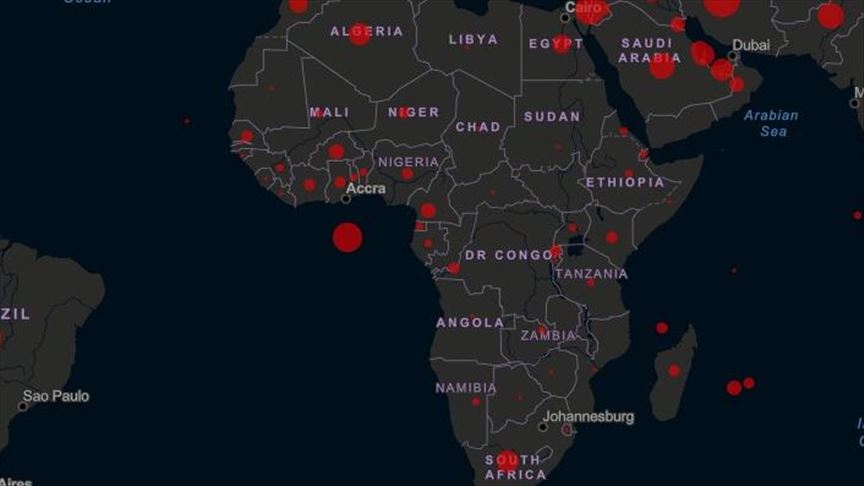
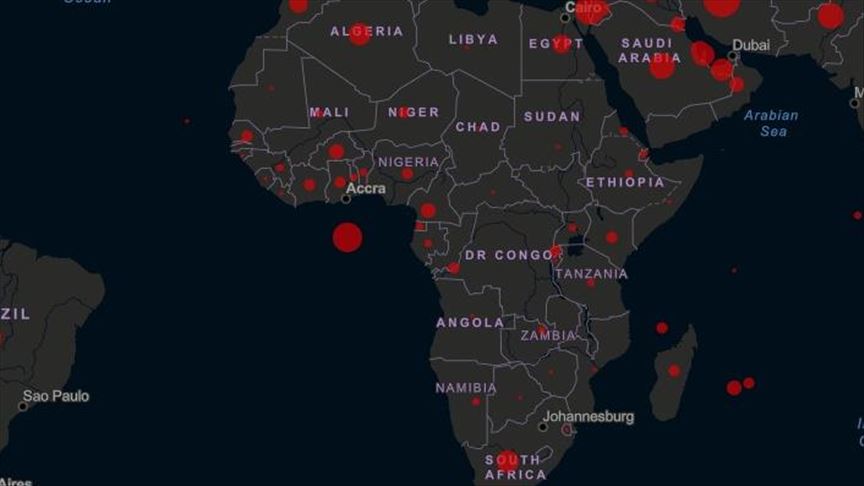
Covid 19 has so far claimed over 35,000 lives, and already caused a massive impact on the world economy. Africa is and will be particularly effected because of dependence on the industrialised world for markets in minerals and commodities. The new economy after corona virus will present opportunities for renewable energy especially wind in Europe and solar in Africa and other parts of the world. Every minute 1,300 watts of power from the Sun hits every square metre of the earth and unlike fossil fuels is free of charge and does not require a vast infrastructure. A small town, an individual householder, a shop, a school can take advantage of solar by installing all the infrastructure needed to use this vast source of power. The coming of electric vehicles can also take advantage of this new infrastructure without the pollution of fossil fuels which in Africa often have to be transported thousands of Kms to reach their customers and then promptly poison the air they breathe and spreads diseases that kill many more people every year than COFID 19.
As leaders plan stimulus packages to bail out their economies, experts have warned against a rapid return to “business as usual” complete with the huge inequalities, and environmental degradation which are common in larger economies. Most of the targets set by the Paris agreement are being missed and remember at Paris the rich countries promised aid on energy alternatives to all countries in Africa. Now is the time for assistance as the virus will have a major impact on Africa and its economy.
Public health experts are already saying that we cannot go back to the old ways of providing power and that all energy systems must be driven on the basis of public health for all; as many die from pollution as die from virus driven epidemics. And of course pollution based diseases are man made. “the climate emergency is much more serious than people think,” says former special representative for climate change and chief scientific advisor to the government, Sir David King.
He said: “Pollution is accountable for around 7 million deaths globally every year and if we take action on climate change we will be taking action on the environment and pollution.”
Only wind, hydro electric power(and sea/wave driven), hydrogen and solar can be classed as pollution free.
In Africa more solar power will mean more jobs because the power will be available for industry, commerce and agriculture (particularly solar driven)
What is needed is a better environmental policy that would lead to better social policy, better healthcare policy and better political policies.”
The co-founder of Extinction Rebellion, Dr Gail Bradbrook, has said there will be a public response to the inadequacies to the coronavirus outbreak similar to the lack of response to the climate and ecological crisis. Even more important if we are to avoid she said a catastrophic outcome to climate change not just in Europe but also in the poorest countries of the world.
The word people have used is ‘impossible’, we cannot conceive of making the changes, but now it’s been forced on us – what once was impossible is now happening.
Speaking about Extinction Rebellion urging governments to aim for net zero emissions by 2025, Dr Bradbrook added: “We were told this was an “impossible target”, but the things happening right now are the things needed to an alternative to the carbon economy.
Africa with the right support from outside could set the pace given the opportunities and the lack of grid power. For example Burkina Faso just a little bigger than UK with 103,000 m2 and 20 million population has 1 gW of installed grid capacity compared with 85 in UK. Burkina Faso will never secure even 40 gW of grid power but it does have high average temperatures 3,000 sunshine hours per year ideal for solar energy.
Further stark impacts of failure to rein in emissions were described by Dr Jason Hickel, lecturer in economic anthropology at Goldsmiths University, who said: “Most of us are more aware of the biophysical consequences of climate change than we are of some of the social consequences of it. Food supply is one of the greater risks we have to consider.
“For every degree we heat the planet the average crop yield around the world declines by about 10 per cent. At the end of the century if we have 3 or 4 degrees of warming above pre-industrial levels, it will collapse the average crop yields by up to 40 per cent.” Containerised Solar as promoted by Offgridinstaller can help ensure that such a catastrophe is avoided by providing power where it is needed. In agriculture solar power can help pump water into irrigation systems and power cold storage warehouses in the rural areas of Africa. Lack of storage is the major source of waste
With the right sort of power and water supply more people can be found jobs and a home in the rural areas of Africa.
Heating beyond 1.5 – 2 degrees leads to scenarios in terms of food supply that are too catastrophic to comprehend. We need rapid, very urgent reductions in emissions otherwise we will see the sort of problems created by virus spread which may be a factor in climate change.
Professor Sam Fankhauser, co-director of the Grantham Research Institute and former deputy chief economist at the European Bank of Reconstruction and Development, said the Covid-19 crisis presented an opportunity to build a greener economy.
He said: “As we move into rebuilding the economy we can pay attention to the carbon intensity of the stimulus packages.
“There are a lot of things that need to happen in a zero carbon economy that are consistent with a rapid boost to the economy.
“The three tests which economists use for a good stimulus is they have to be timely, targeted and temporary and there are a lot of climate change measures which fall into that category. So we can have a low-carbon recovery, that’s absolutely possible.
After the coronavirus pandemic is over we cannot go back to the way it was before, things have to change and they can only improve in Africa with more electricity to provide the power agriculture and industry need to provide decent living standards for everyone. This can only be done with renewable energy in Africa and that means solar energy.
Moving to a low carbon economy with solar energy is the exciting alternative.
By comparison…..
- Generators are prone to breakdown and require a constant supply of fuel which may not be available.
- Fuel for generators is expensive especially in Africa
- Energy from the sun is free and will always be free and is always available in most of Africa.
- The suns energy can be stored in evermore efficient batteries which have a longer and longer life. 5 years ago the full life of a battery was 6-7 years, now it is 20 years.
- Generators have a short life and are noisy and polluting
- Solar panels have a life of 30 years and more.
- Solar panels are becoming more efficient every year at converting power from the sun
- The suns energy is easily converted into 220V alternating current used by most electrical appliances including fridges, lighting, TV, electric cooker and for charging phones and computers
- Grid power when its available is expensive and unreliable
- 10)Its expensive to connect villages to the grid and time consuming
- 11)Customers in the villages will only consume small amounts of power so are not good customers for the power distribution companies
- 12)The cost of installing solar equipment has fallen by 95% in 5 years
The quickest way to get solar and to enjoy all that free power -1300 watts per m2 everywhere in Africa is to buy a solar container already fitted out in Britain. No waiting for years and much cheaper and quicker than connecting to the grid. Also remote Africa wide monitoring when after system is installed. Contact Offgridinstaller.com
Find out more about our off-Grid solar services for Africa
Our brands
Off-Grid Installer are proud to bring you the best solar products, sourced only from the world's leading manufacturers.


Interested in getting started?
Get in touch with one of our Off-Grid experts now.
Contact Us
Contact us today to speak with our experienced and knowledgeable consultants — we would love to hear from you!
Address
Trinity Suite, Office 4, Hawkesyard Hall, Rugeley, Staffordshire WS15 1PU