
Off-grid power in Dominica
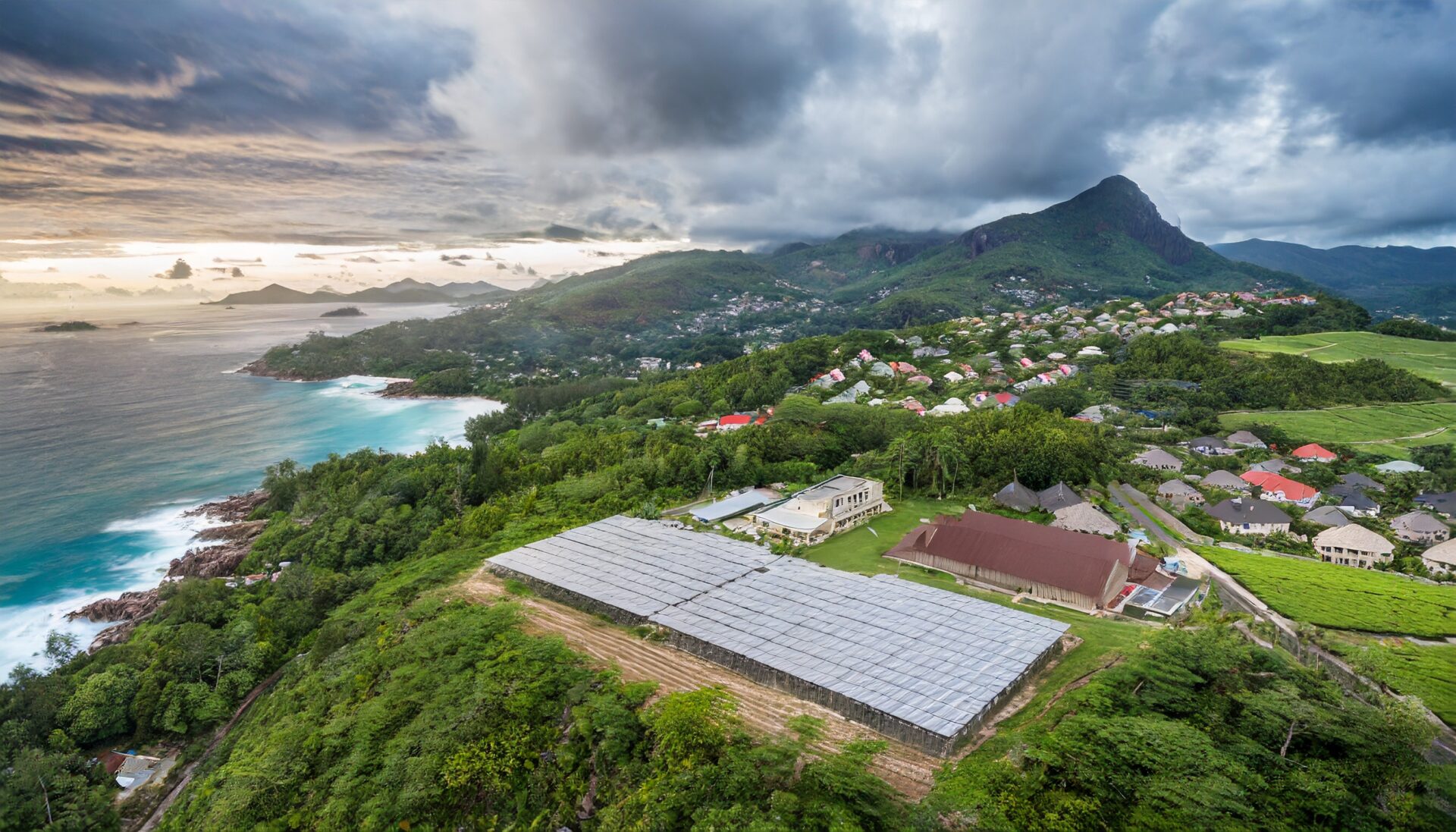
Dominica is a mountainous island located in the Windward Islands in the eastern Caribbean. Its official name is the Commonwealth of Dominica.
It is the ’nature’ island in the Caribbean with rain forests, a mountain, Morne Diablotins rising to 1,447 metres and the worlds second largest hot spring known as ‘boiling lake’. The scenery is spectacular and attracts many eco tourists. There are many volcanoes but there has been no eruption for many years.
It’s a large island of 750 km2 but only has a small population of 71,000 with Roseau, the capital having 20,000 plus including the suburbs. The island measures 47 kms long and 26 kms wide.
The Arawak Indians arrived in Dominica in the 5th Century while Columbus passed the island in 1483. The island was controlled by France between 1690 and 1763 which accounts for the many French names and is adjacent to the two French islands of Guadeloupe and Martinique. The British controlled the island from 1763 to 1978 when the island became an independent republic.
In the 18th Century the economy was dominated by sugar and coffee like other Caribbean islands but was always a little different. It’s the only island to have retained a significant pr-Columbian population of 3,000 Arawaks living in villages on the east coast. After slavery was abolished in 1838 people of African descent soon took control of the island legislature much to the opposition of the colonists and British. In 1896 colonial, direct rule was imposed and the population was disenfranchised. However after the First World War, a semi free election was restored with a new franchise. The Second World War provide further impetus and independence was declared in 1978. Rarely for the English speaking Caribbean, Dominica became a republic immediately after independence but stayed as a member of the Commonwealth.
The GDP is $1.02 billion with a per capita income of $14,285. Dominica has a cautious well managed government with a reduction in public debt and a major rise in incomes, doubling in 20 years. However this was from a low base as Dominica was traditionally one of the poorest island nations in the Caribbean.
Dominica Geography
Dominica has 2 ecoregions, one dominated by tropical rain forest and the other by Xeric scrub. The rainforest which surrounds 3 major volcanic cones is all part of the Trois Pitons National Park and is classed by UNESCO as a world heritage site. The park accounts for the origins of 365 separate streams and rivers.
This amazing landscape is the main attraction for tourists and ecotourism; there are beaches and amazing scuba diving but there are better beaches on other islands. Dominica needs solar to maintain the unique environment providing power for hotels and eco sites but also charging points for EV car and motor bikes and commercial vehicles.
This part of the Caribbean is very susceptible to hurricanes and Dominica has had three very destructive storms since 2007. David in 2007 and Erika in 2015 both caused major damage to the infrastructure including roads, power network and most of buildings – 90% of all buildings in 2015 with damage totalling $484 million. In 2017 , Maria accounted for $950 millions worth of damage – worst in its history. Donations from France, Netherlands and UK plus funding from IMF is helping them to recover.
Dominica Economy
Like most of the Caribbean, Dominican economy was dominated by agriculture either on smallholdings or estates. The main crop is bananas with around 20,000 tonnes of fruit exported annually and produced in 10 cooperatives. Citrus and coconuts are also grown in commercial quantities but production of bananas is in decline down from 30,000 tonnes 2007. Agriculture remains a key part of the economy employing a third of the labour force but there has been a gradual move to higher value export crops including aloe vera, mango, guavas and papayas with vegetables for local consumption. Most agriculture is organised into cooperatives in order to maintain standards and Dominica has duty free access to the US market under the Caribbean Basin Initiative (CBI).
Unlike agriculture, services continue to expand and employ more than 60% of the workforce. The two important activities are offshore finance with payment processing and offshore banking. Foreigners are able to secure citizenship by investing in the island. The government is attracting finance to build 5,000 hurricane proof farms but so far only 125 have been completed.
The CBI encourages ecotourism in Dominica’s rich World Heritage landscape and this is now emerging as the most rapidly growing activity. Lots of new roads and 2 airports help in attracting tourists to the island but the Government has signed up (July 2021) with a Canadian company to complete a new international airport in four stages up to 2025 including a massive expansion in cargo capacity and a longer runway to accommodate flights from Europe and North America. This will be in the north of the island about an hour from the capital, Roseau.
However Dominica is suffering from a falling population and a smaller workforce for the jobs being attracted to the island. There are large Dominican populations in the UK (6,739) and US (8,560); island life is not for everyone and people emigrate to develop their skills and live in a more urban society. The population of 70,739 in 2011 is almost the same as the 70,000 at independence in 1978. Since 2011 population has risen to 72,000.
Dominica Energy
Electricity is expensive at 39 US Cents per kWhr but a lot more is renewable compared with other Caribbean islands. 3 hydro plants with small amounts of solar and geothermal account for a total of 28.6% from renewable sources.
The three HEP plants are located on Roseau River with capacities of 1.3, 1.8 and 3.5 mW. An additional 17 mW is available for development.
The balance of 71% is accounted for by diesel, placing a strain on the balance of payments and the grid system has high transmission losses of 8.2%.
Current generating capacity is 23.8 mW while peak demand is 16.8 mW. Total annual generation is currently 100.7 gWhrs. 37% of consumption is commercial, 40% residential and 7.8% small businesses including agriculture.
Offgridinstaller can help clients in Dominica, both private and commercial to operate offgrid and fully utilise the free solar energy of 5 kWhrs per square metre. Their offgrid systems can also recharge electric vehicles – cars, pick up , motor bikes and electrically assisted bikes all using free power.
For new properties we can integrate solar panels into the roof and for commercial buildings or apartment blocks we can include a 20 foot container fully fitted and equipped with batteries, inverters and power control units. Ideal for preventing damage to equipment, protecting against hurricanes and preventing vandalism and even theft of power.
As the eco paradise of the Caribbean, Offgridinstaller will assist all eco homes, hotels, campsites, restaurants and tourist sites to ensure that power is acquired carbon zero and is fully sustainable preserving this unique environment into the future.
Our brands
Off-Grid Installer are proud to bring you the best solar products, sourced only from the world's leading manufacturers.


Interested in getting started?
Get in touch with one of our Off-Grid experts now.
Contact Us
Contact us today to speak with our experienced and knowledgeable consultants — we would love to hear from you!
Address
Trinity Suite, Office 4, Hawkesyard Hall, Rugeley, Staffordshire WS15 1PU